Extended 30–60 Day Booking Horizon
Travelers arrange airport logistics immediately following flight and resort confirmations. We use multi-touch search strategies that lock in direct bookings early.
Resort transfers are researched and reserved weeks in advance by international travelers across multiple time zones. We build cross-border search funnels that capture high-ticket private SUV and luxury van reservations directly before hotel concierge markups.
Gateway Logistics
Airport transfers are the core recurring cashflow for ground transport. We engineer dedicated single-airport campaigns with terminal-level staging intelligence.
High-volume luxury US and UK arrivals booking private transfers to Paradise Island, Albany, and Baha Mar.
Longer corridor transfers requiring upfront flat-rate transparency to convert against generic resort bus shuttles.
High-density private villa and 5-star resort arrivals where VIP meet & greet service wins the booking.
High-Yield Corridors
We capture high-fare point-to-point transfers and hourly contracts with keyword bidding tailored to corporate hubs and affluent corridors.
Market Economics
Understanding regional booking triggers separates profitable Google Ads campaigns from money-losing broad match setups.
Travelers arrange airport logistics immediately following flight and resort confirmations. We use multi-touch search strategies that lock in direct bookings early.
International guests demand instant quotes without foreign phone toll charges. We route ad traffic to fast WhatsApp and web quote funnels.
Port schedules generate precise waves of multi-passenger transfers and day-charter bookings with high profit margins.
Landing pages clearly highlight 'No waiting for 40 other passengers', 'Direct private vehicle', and 'Complimentary cold beverages upon arrival'.
Precision Architecture
Every dollar is mapped to high-intent search terms with negative keyword shielding and automated bid controls.
Clear per-vehicle pricing with included luggage, tolls, and return discounts eliminates international booking friction.
Automated quote confirmation and WhatsApp routing capture inquiries instantly at 2 AM local time when European or US West Coast travelers are booking.
Automated budget algorithms scale up aggressive bidding from November to April and reallocate efficiently during shoulder periods.
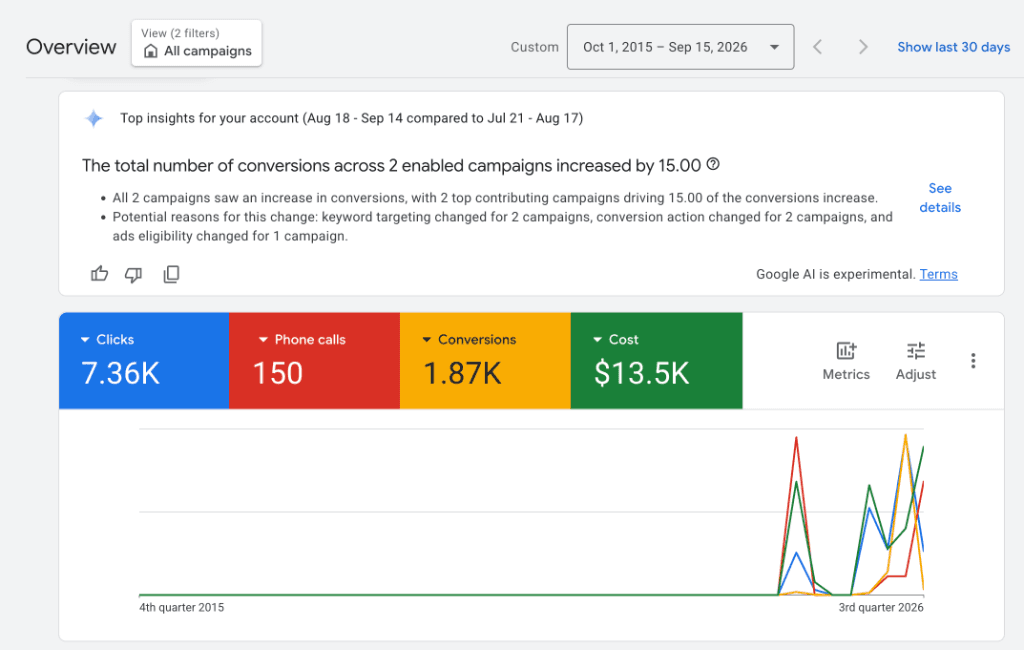
840+ international resort and cruise port transfers booked with high-converting search funnels and zero OTA commission losses.
Fleet Scalability Engine
Whether you operate 4 executive SUVs or 35 mixed livery vehicles, our Google Ads and lead generation system scales your booking pipeline while keeping fleet utilization at peak efficiency.
Targeted Verticals
Google Ads for chauffeur and limousine businesses that need more airport rides, corporate bookings and local bookings.
Explore Limo campaign specs →High-intent airport transportation marketing that turns local search and booking intent into reservations and repeat business.
Explore Airport Transportation campaign specs →Questions & Answers
Usually weeks ahead, sometimes a month or more. The flight is booked first, then the hotel, then the transfer. That long window means last-click attribution flatters the final search and hides the earlier research visit that actually did most of the persuading.
Operating in the Caribbean
Book a 20-minute growth audit. We’ll analyze your local competitor bids, negative keyword leaks, and missed call gaps.